Can You Monitor an Old Rooftop AC Unit?
Yes. AC monitoring works on the units you already have, any brand and any age. You don't need a new unit, a smart thermostat or a building management system.
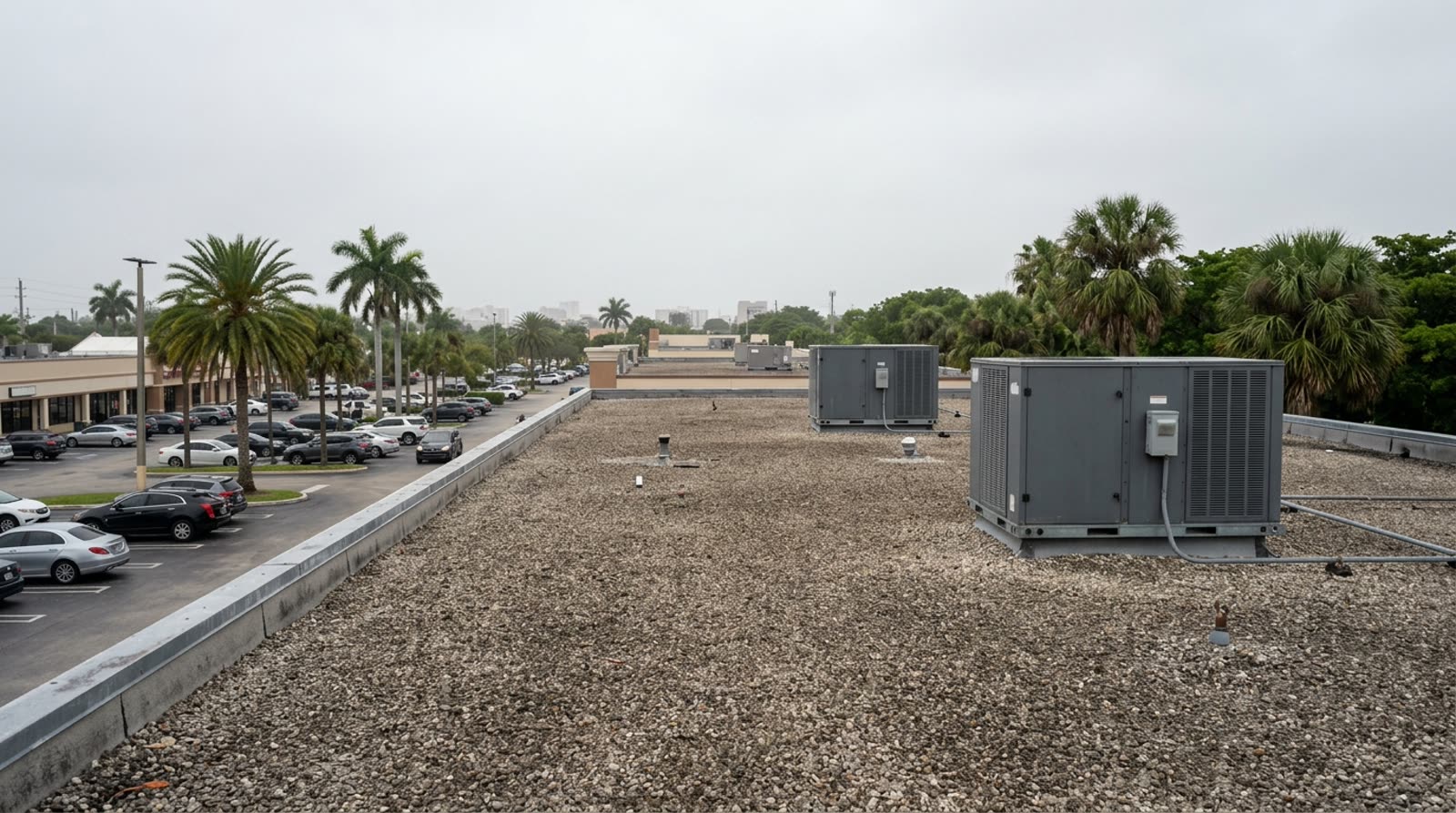
Yes, you can monitor an old rooftop AC unit without replacing it. SmartHVAC clips sensors onto the unit you already have, whatever the brand and however old it is. When the unit starts working harder than it should, or the air coming out isn't as cold as it used to be, you get an alert on your phone and by email. You don't need a smart thermostat or a building management system, and nobody opens the refrigerant lines.
The sensors read the copper lines, the air and the wiring. They don't talk to the unit's own electronics, which is why the brand and the age of the unit don't matter.
Why older units are the ones most worth watching
ASHRAE, the engineering society that sets most HVAC standards, puts the median service life of a rooftop air conditioner at about 15 years. Median means about half of units are replaced before that age and half last longer. If your unit is 12 or 15 years old, it's in the range where a lot of units like it are being replaced.
Commercial service companies list frequent service calls and part replacements as a sign that a system is wearing out. So an older unit is more likely to need a repair, and it's useful to know about it early.
Older units can also cost more to repair. Many AC units built before 2010 use a refrigerant called R-22. Since January 2020, R-22 is no longer produced or imported in the US, so repairs rely on recovered and recycled supplies. The EPA has said the cost of servicing R-22 equipment may rise. If you're not sure what your unit uses, your AC company can tell you from the label.
Most failures don't happen all at once. The unit runs longer, draws more current and blows slightly warmer air for days or weeks before it stops cooling. Our guide to the signs a compressor is failing goes through what that looks like. If you can only watch one unit, the oldest one is a sensible place to start.
What the sensors measure
A SmartHVAC install puts nine sensors on the unit:
- Five temperature probes clipped onto the copper refrigerant lines.
- Two air temperature probes, one in the air coming back from the room and one in the cold air going out.
- Two current sensors clamped around the wires feeding the compressor and the fan.
For the first few weeks, the software learns what normal looks like for your unit: how long it runs, how much power it draws, how cold the air coming out is. After that, you hear nothing while everything stays in range. If something changes, the alert says what was detected and what it's likely to be, in plain language, so you can call your AC company with something concrete instead of "it's not cold."
The faults it's set up to catch include low refrigerant, too much refrigerant, a dirty condenser coil, a blockage in the liquid line, a leaking compressor valve, and air or other gases in the refrigerant. You don't need to know what these mean. Your AC company does, and the alert gives them the data behind it. There's more on this approach in our post on non-invasive HVAC monitoring.
What you don't need
- A new AC unit. The sensors go on the one you have.
- A smart thermostat or a building management system. Nothing connects to your thermostat, your building's controls or your network. Most restaurants and small shops don't have a building management system, and you don't need one for this.
- Any work on the refrigerant. The installer opens the unit's access panels to reach the lines and wiring, but the refrigerant circuit is never opened and no wire is cut. No gauges go on, and no refrigerant is lost.
- A different AC company. Keep the one you have. You choose who gets the alerts: you, your AC company, or both.
Fitting the sensors takes about an hour per unit. The cost has two parts, hardware per unit and a monthly service per site, and our guide to how much HVAC monitoring costs breaks that down.
When replacing the unit is still the right call
Monitoring doesn't fix anything. It tells you early, so the repair can be a normal visit instead of an emergency one. It won't stop a unit from wearing out, and some units are due for replacement whether they're monitored or not.
A few signs that replacing may be the better choice:
- The unit needs frequent repairs and is more than 10 years old. ENERGY STAR lists both as reasons to consider a replacement.
- The repair quote is large compared to a new unit. A common rule of thumb among service companies is that once a repair costs more than half the price of a replacement, it's time to replace.
- It's an R-22 unit with a refrigerant leak. Fixing the leak and recharging depends on recycled R-22, so ask your AC company to price the repair against a replacement.
Your AC company is the right person to make this call, because they can look at the unit. If you do decide to replace in the next year or two, monitoring the old unit until then still means you're more likely to hear about a problem before it stops cooling, and the history can help you decide which unit to replace first.
Common questions
Does AC monitoring work with any brand?
Yes. The sensors read the refrigerant lines, the air and the wiring, so brand doesn't matter. We check what you have before we install.
Do I need a smart thermostat or building management system?
No. SmartHVAC doesn't connect to your thermostat or your building's controls.
Will monitoring make an old unit last longer?
Not on its own. It tells you when something starts going wrong, so you can get it repaired while it's still a small fix. The repair is still done by your AC company.
To see how it would work on your units, book a demo. For more guides on catching AC failures early, sign up below.
Want to see what it would catch on your units?
Book a demo →